Search Results for fmg

How to Choose a Liquid Flow Meter for Your Applications? Introduction to Flow Measurement Equipment for Water, Wastewater, Oil, and Processes
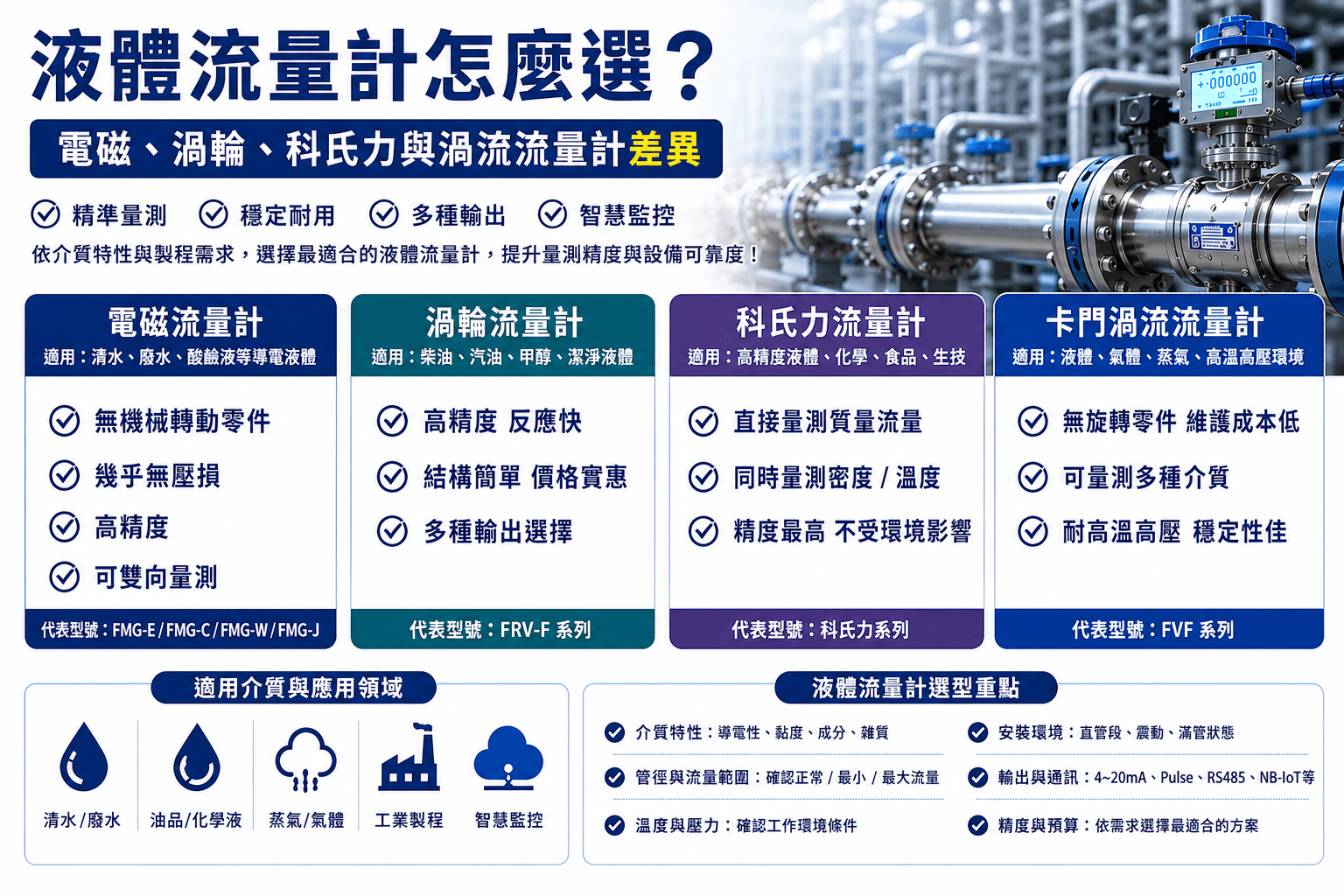
How to Choose a Liquid Flow Meter for Your Applications? Introduction to Flow Measurement Equipment for Water, Wastewater, Oil, and Processes

Looking for a suitable liquid flow meter for water, wastewater, oil, and process pipelines? This page summarizes the application differences between electromagnetic, turbine, insertion, and clamp-type ultrasonic liquid flow meters, explaining key selection factors such as flow rate, pipe diameter, viscosity, conductivity, installation method, signal output, and alarm functions to help you choose the right liquid flow meter for your site conditions. Click to see more product information, or contact First General Technology immediately for professional selection and system integration advice.
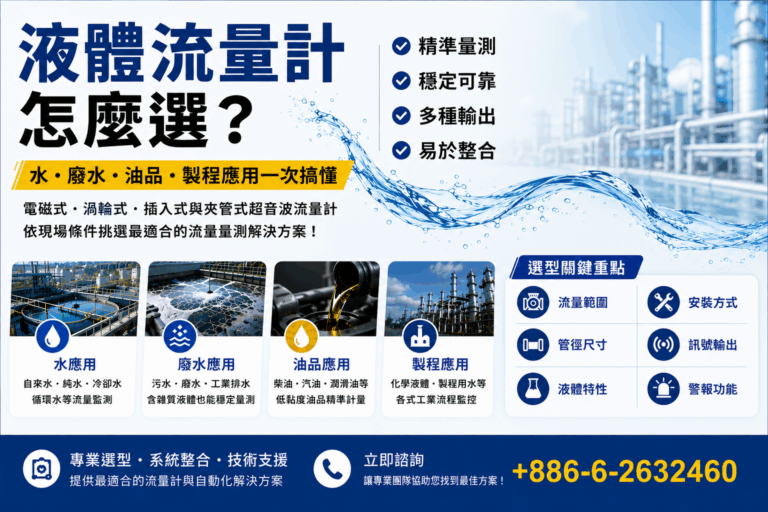
How to choose a liquid flow meter? Differences between electromagnetic, turbine, Coriolis, and vortex flow meters.

How to choose a liquid flow meter? Differences between electromagnetic, turbine, Coriolis, and vortex flow meters.

Want to know how to choose a liquid flow meter? Different liquids require different measurement principles. Whether it's clean water, wastewater, oil, chemical liquids, or steam, each will affect the accuracy and lifespan of the flow meter. This article summarizes common types of liquid flow meters, their working principles, key selection points, installation precautions, and differences between various flow meters to help you quickly find the most suitable flow measurement solution.

What are some common problems with flow meters used in smart buildings?

Flowmeter

In smart buildings, flow meters are crucial devices for energy management, water resource management, and HVAC system monitoring. However, because they are installed within pipelines or systems for extended periods, they often encounter on-site and maintenance issues. I've compiled these into a "Type → Common Problems → Causes → Solutions" framework for easy and quick understanding.

What flow meters are commonly used in smart buildings?

Smart building logo

In the energy and electromechanical management systems of smart buildings, flow meters are used to monitor and optimize the usage of various fluids, such as water, chilled/hot water, HVAC cooling water, and water supply and drainage systems. This data is typically transmitted back to the building management system (BMS) or energy management system (EMS) for analysis and control.

How to Choose a Flow Meter? From Types and Principles to Practical Cases, We'll Teach You How to Select the Right Model for the Medium!

A table to understand the selection of flowmeter types: electromagnetic flowmeter, Karman vortex flowmeter, mass flowmeter, impeller flowmeter, turbine flowmeter, area flowmeter, diaphragm flowmeter, ultrasonic flowmeter, Coriolis flowmeter , pitot tube flowmeter, orifice flowmeter, open channel flowmeter

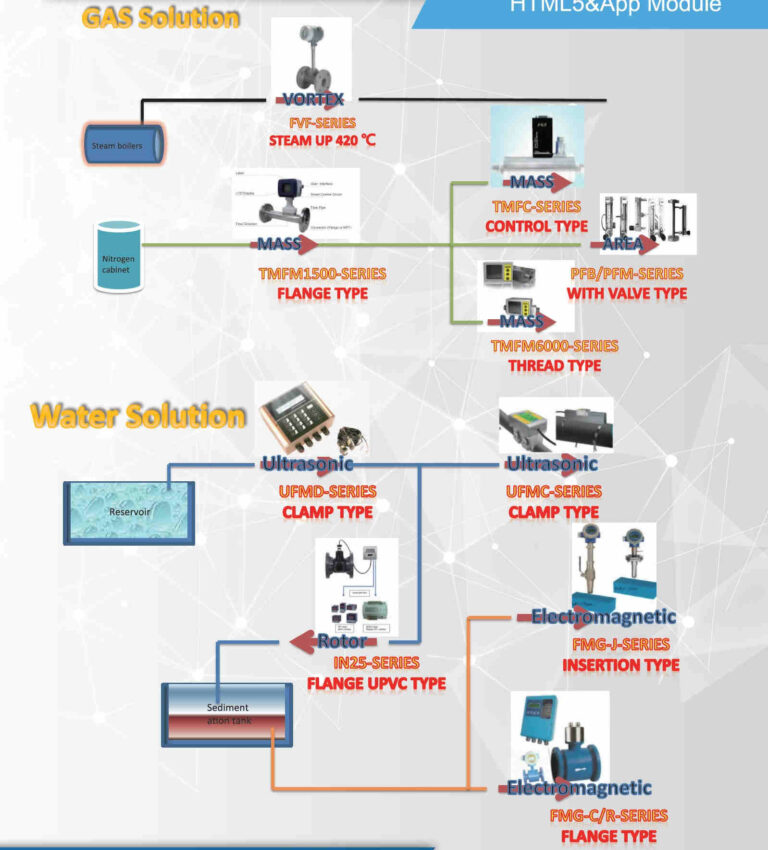
Understanding how to select the most suitable flow meter model based on the medium is crucial for improving industrial measurement accuracy. Whether it's water, gas, or steam, choosing the right flow meter can significantly improve production efficiency and accuracy. For example, FMG-E or FMG-C electromagnetic flow meters are suitable for water and conductive liquids, while the TMFC series mass flow controllers (MFC) are recommended for precise gas control. For environments requiring non-stop installation, UFMA clamp-on ultrasonic flow meters are ideal, while FVF vortex flow meters should be selected for steam and high-pressure conditions. These flow meter models ensure accurate and stable flow measurement in industrial environments. Choosing the right flow meter model helps you solve challenges in various operating conditions.