FGT think your best choice in the future
System Integration Designers in FGT



Photoelectric Distance Sensor Switch | LAT Series | DISORIC
German DISORIC manufacturer ■ First General Company | General agent for 18 years | PLC engineering technology with practical experience | LAT series
It is used to measure distances at the millimeter or micrometer level, control material levels and positioning processes, and monitor dimensional accuracy and object presence for precise positioning.
Photoelectric Distance Sensor Switch | LAT Series | DISORIC
In the field of automation, there are the most diverse application scenarios:
From material level measurement and object positioning to quality control, the specific requirements vary depending on the application task, such as requirements related to the surface quality of the object or the required precision.
High resolution, the ability to measure bright or dim objects, long distances, and high ambient light immunity—choosing the right sensor is crucial here. di-soric offers the perfect non-contact distance measurement sensors for these applications in automation.
Fill level
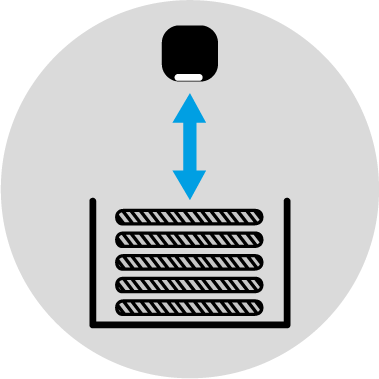
distance
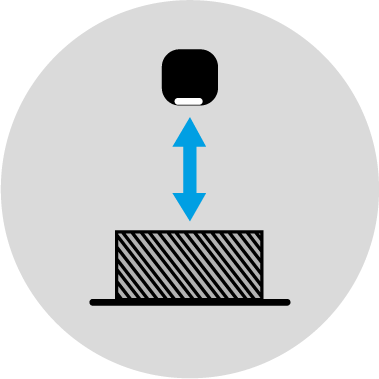
position
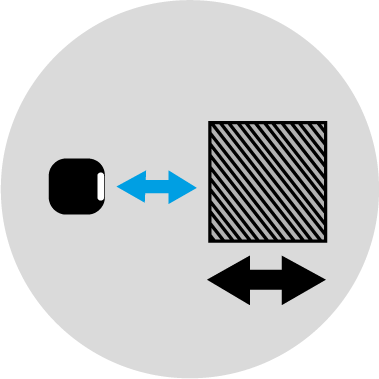
Quality Control
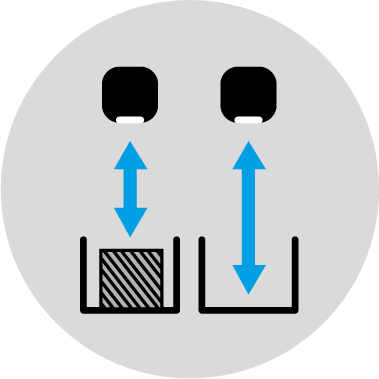
diameter
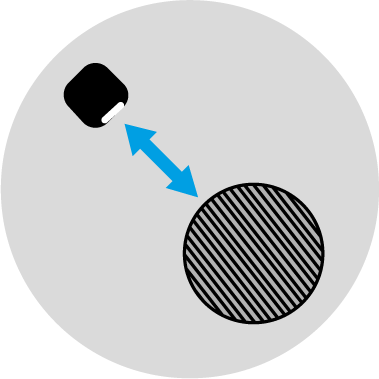
Thickness measurement
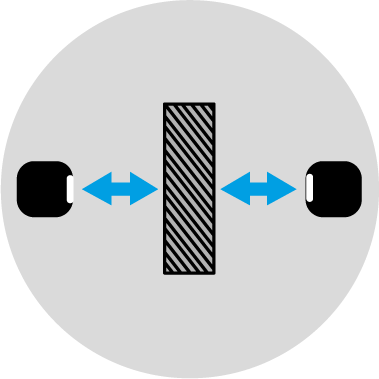
contour
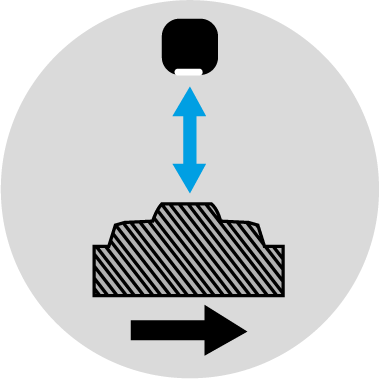
For us,Optimal Distance Measurement in AutomationThis means using as few products as possible to address the most diverse applications.
di-soric's product portfolio encompasses a wide range of optical and ultrasonic distance sensors designed for non-contact distance measurement. Our sensors are renowned for their innovative IO-Link functionality, diverse sizes, and robust performance across various technologies.
The innovative IO-Link functionality implemented first and foremost makes it possible to complete certain measurement tasks within a single application, such as thickness measurement or to avoid interference between multiple sensors.
Optical distance sensor
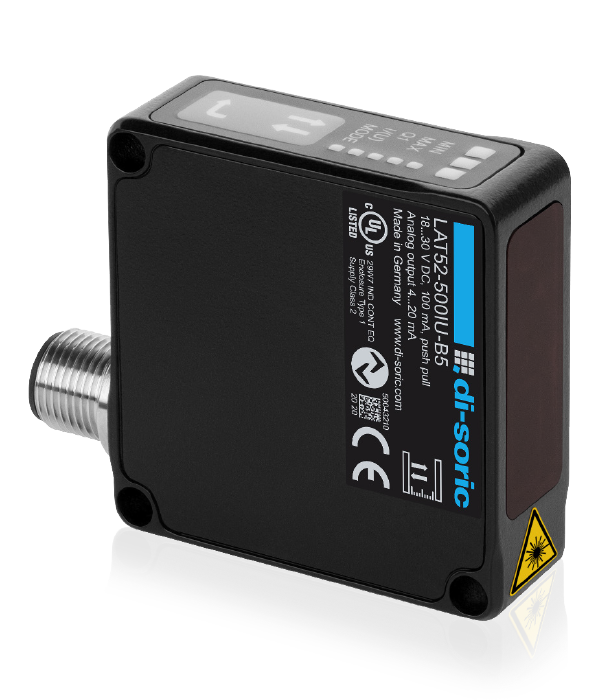
LAT-52 Compact
- 30 – 500 mm
- Used for precise distance measurement
- Three common measurement ranges
- Sensor modes and filters to obtain optimal measurement results
- Operate using buttons or via IO-Link
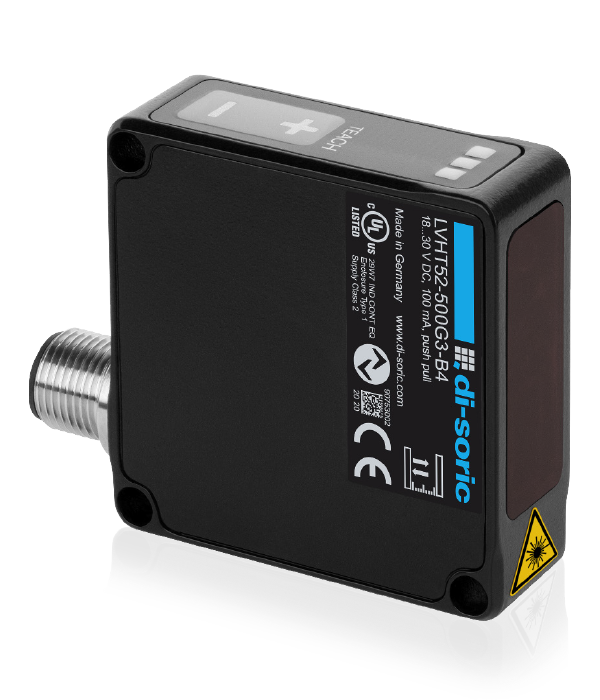
LVHT-52 Compact
- 50 – 500 mm
- For precise distance detection
- Compact structure, large measurement range
- Foreground and background suppression
- Operate using buttons or via IO-Link
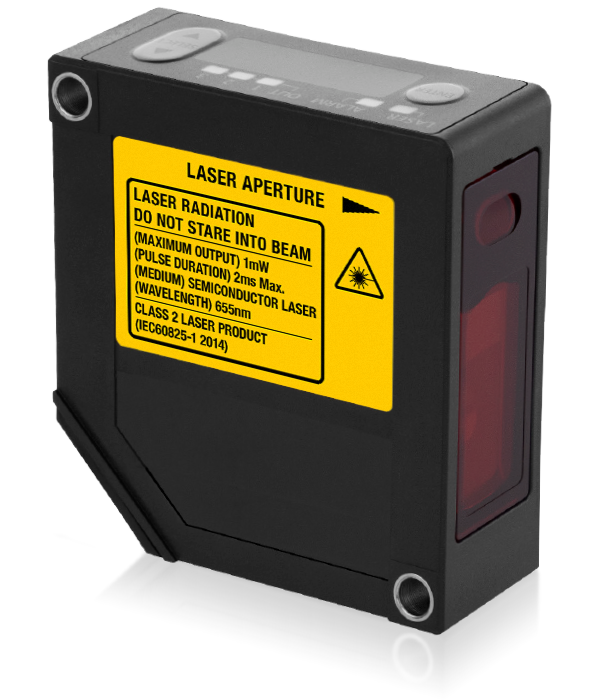
LAT-61 Precision
- 26 – 180 mm
- Achieve high-precision and rapid measurement
- Micrometer-level resolution
- Up to 5,000 measurements per second
- Operate via buttons and display screen
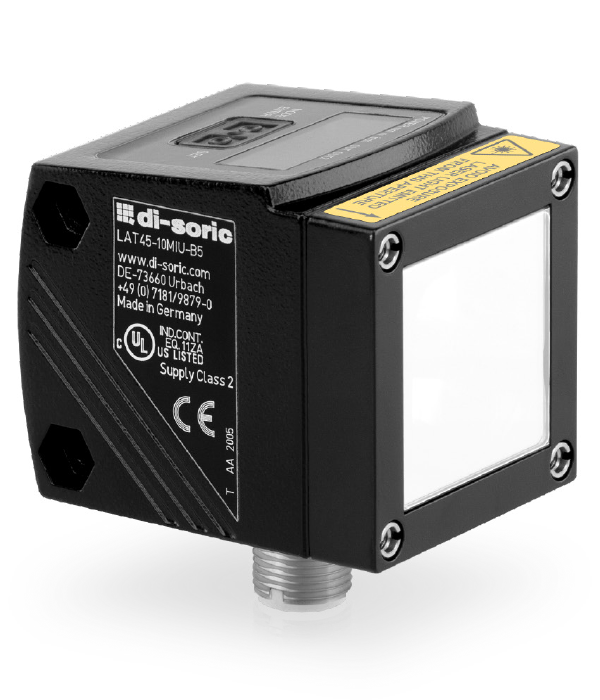
LAT-45 Long Range
- 200 – 10,000 mm
- Can be used anywhere
- Suitable for dark surfaces
- High ambient light immunity
- Operate using buttons, a display, or via IO-Link.
feature
The optical rangefinders use red lasers to measure distance quickly and accurately. All sensors are housed in robust metal casings. They offer a wide measurement range up to 10 meters with micrometer-level resolution.
Types of photoelectric switches
What is a photoelectric switch?
A photoelectric switch is a sensor that uses light (usually infrared) to detect the presence of objects. It consists of a transmitter and a receiver. By detecting whether an object blocks or reflects the light beam, it converts the optical signal into an electrical signal, which then controls the circuit. The advantages of this type of switch are that it can detect objects of various materials and has a wide range of applications, commonly found in automation control, security systems, and warehousing equipment.
What is a photo optic sensor?
A photooptic sensor is a device that uses the physical properties of light (such as intensity, reflection, or obstruction) to detect the presence or changes in the state of an object. It typically consists of a "light-emitting section" that emits light and a "light-receiving section" that receives changes in light. When an object blocks or reflects light, the amount of light received by the light-receiving section changes, and the sensor converts this change into an electronic signal and outputs it.
What is the working principle of a diffuse reflective photoelectric switch?
The working principle of a diffuse reflective photoelectric switch is that the transmitter emits light, and when the light is reflected back to the receiver by the surface of an object, a switching signal is generated. This type of sensor integrates the transmitter and receiver, detecting objects by the reflection of light from their surfaces. When the amount of reflected light is sufficient, the receiver will sense it and generate a signal.
| Types of | Electronic |
|---|---|
| Installation method | Thread |