FGT think your best choice in the future
System Integration Designers in FGT


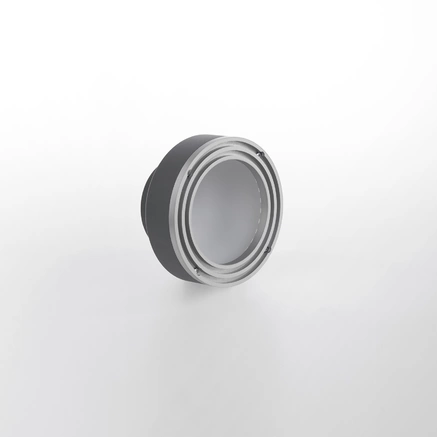

Machine Vision System | BE-DOME | Dome Light Source | DISORIC
German manufacturer DISORIC (First General Machinery Co., Ltd.) | 18 years as the sole distributor | PLC engineering technology with practical engineering experience | Machine vision systems | BE-DOME | Dark-field light sources
It ensures extremely diffused lighting, thereby minimizing shadows caused by rough or scratched surfaces.
- Description
- Additional information
- Product Specifications
- Product accessories and software
- Special needs
- Inquire now
Machine Vision System | BE-DOME | Dome Light Source | DISORIC
- The BE-D dome light source ensures extremely diffused lighting, thus minimizing shadows cast by rough or scratched surfaces. This allows camera applications to capture focused contrast and product features in a much more stable manner than point or area light sources.
- Applications: Instrument panel scale inspection, metal can character inkjet printing inspection, chip gold wire inspection, electronic component printing inspection, etc.
Leveraging the expertise of FGT's engineering team in AI (Artificial Intelligence) and BI (Big Data), we can quickly assist you in building an AI+AOI system solution.
No need to hire professional human resources personnel; the driving force behind commissioned projects to create mobile-enabled machine vision platforms.
Advantages and characteristics
Advantages of dome light source
- Uniform illumination: It provides all-around, uniform diffused light, eliminating glare, shadows, and reflections for clearer images.
- Eliminate interference: It effectively overcomes visual interference caused by uneven surfaces of the object being inspected.
- High accuracy: Improve the accuracy and reliability of image processing.
- Wide applicability: Suitable for the detection of various surface features and application scenarios.
Dome-shaped light sources are primarily used for visual inspection of reflective, curved, uneven, or undulating surfaces, such as inspecting printing on aluminum foil packaging, the appearance of pharmaceuticals and food, and defects in electronic or hardware components. Their core advantage is that they provide uniform illumination from all directions through the hemispherical diffuse reflection inner wall, thereby eliminating interference from strong light spots, shadows, and surface unevenness, and improving inspection accuracy.
Main application areas
- Surface defect detection: Suitable for detecting objects with scratches, uneven surfaces, or undulations, such as electronic components, metal parts, or plastic covers.
- Printing and character recognition: It can clearly identify printed text on reflective or curved surfaces, such as cigarette boxes, aluminum foil packaging, or markings on the bottom of cans.
- Complex surface inspection: It is particularly suitable for inspecting spherical, curved, or other curved surfaces, such as for inspecting medicine capsules or ball bearings.
- Reflective object detection: For reflective surfaces such as metal and glass, it can effectively eliminate strong reflections and allow you to see surface details clearly.
- Food and drug appearance inspection: It can evenly illuminate the surface of food or medicine for visual integrity inspection.
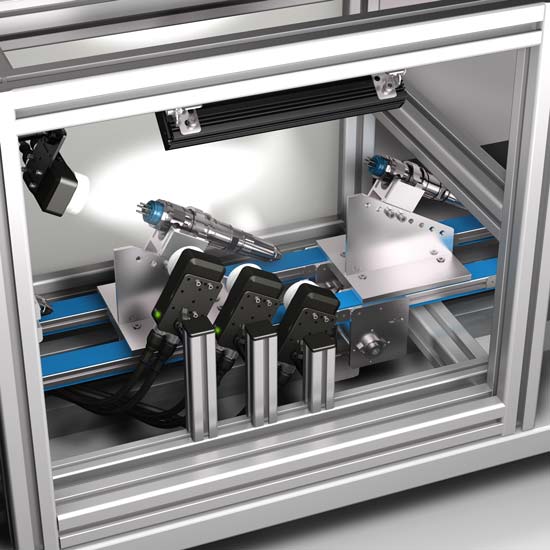
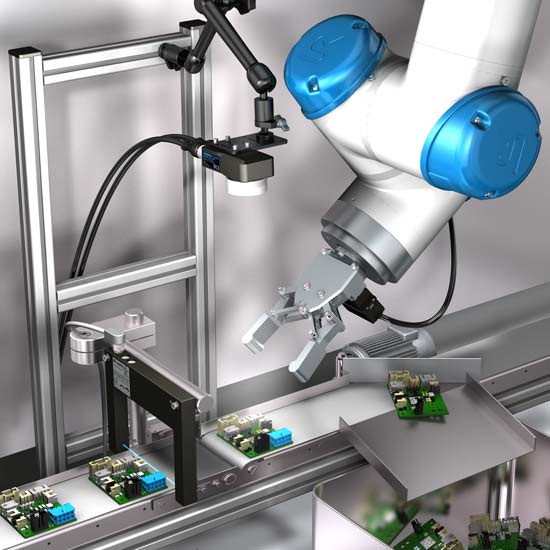
Types and characteristics of LED light sources
1. Ring light source
Offering different illumination angles and color combinations to better highlight the three-dimensional information of objects; high-density LED array for high brightness; various compact designs to save installation space; solves the problem of shadows from diagonal illumination; optional diffuser plate for uniform light diffusion. Applications include PCB substrate inspection, IC component inspection, microscope illumination, LCD calibration, plastic container inspection, and integrated circuit marking inspection.
2. Backlight
High-intensity backlighting with a high-density LED array effectively highlights the shape and contours of objects, making it particularly suitable as a microscope stage. Dual-use (red/white) and multi-use (red/blue) backlights can be configured to produce different colors to meet the multi-color requirements of various measured objects. Applications include dimensional measurement of mechanical parts, shape inspection of electronic components and ICs, detection of film stains, and scratch detection on transparent objects.
3. Bar light source
It is the preferred light source for test objects with large square structures; the color can be customized and freely combined according to requirements; the illumination angle and installation are adjustable. Applications include metal surface inspection, image scanning, surface crack detection, and LCD panel inspection.
4. Coaxial light source
It can eliminate shadows caused by uneven object surfaces, thereby reducing interference; part of it adopts a beam splitter design to reduce light loss, improve image clarity, and uniformly illuminate the object surface. It is best suited for scratch detection on highly reflective objects, such as metal, glass, film, and wafer surfaces; damage detection of wafers and silicon wafers; mark point positioning; and packaging barcode recognition.
5. AOI dedicated light source
It features tri-color light illumination from different angles, which can highlight the three-dimensional information of the solder; an additional diffuser board guides the light and reduces reflection; different angle combinations; applicable to circuit board solder inspection.
6. Spherical Integral Light Source
The hemispherical inner wall, with its integrating effect, uniformly reflects light emitted from the bottom 360 degrees, resulting in highly uniform illumination across the entire image. It is applicable to the inspection of curved surfaces, uneven surfaces, arc-shaped surfaces, or highly reflective surfaces such as metals and glass.
7. Linear light source
Ultra-high brightness, using cylindrical lenses for light focusing, suitable for various continuous detection applications on production lines. Dedicated for array camera illumination and AOI (Automated Optical Inspection) applications.
8. Point light source
High-power LEDs, small in size and high in luminous intensity; a replacement for fiber optic halogen lamps, particularly suitable as coaxial light sources for lenses; high-efficiency heat dissipation device significantly extends the lifespan of the light source. Suitable for telecentric lenses, used for wafer inspection, mark point positioning, and wafer and LCD glass substrate calibration.
9. Combined bar light source
With four-sided strip lighting, each side's illumination is independently controllable; the required illumination angle can be adjusted according to the object being tested, making it widely applicable. Applications include PCB substrate inspection, IC component inspection, solder joint inspection, mark point positioning, microscope illumination, packaging barcode illumination, and spherical object illumination.
10. Alignment light source
It is a dedicated light source for alignment on fully automatic circuit board printing machines. The alignment light source is fast, has a wide field of view, high precision, small size, is convenient for detection and integration, has high brightness, and can be equipped with an auxiliary ring light source.
What is machine vision?
What are the principles of visual recognition?
Machine vision (MV) refers to an imaging-based method for automated inspection and analysis, widely used in industrial automation inspection, process control, and robot guidance. It encompasses various technologies, software and hardware products, integrated systems, motion, methods, and expertise. As a system engineering discipline, machine vision is considered distinct from computer vision, which belongs to computer science. It attempts to integrate existing technologies in new ways and apply them to practical problem-solving. The entire machine vision process includes planning requirements and project details, followed by solution development. During system execution, imaging begins, followed by automated image analysis and extraction of necessary information.
Main application areas
Machine vision technology is widely used in industrial production and automation scenarios:
- Automated Optical Inspection (AOI): Detects defects, flaws, or incorrect assembly on the surface of a product.
- Quality control: Ensure that the product size, shape, or color meets the standards.
- Positioning and guidance: Guiding the robot to accurately grasp, place, or assemble parts.
- Identification: Reading barcodes, QR codes, text, or identifying objects.
- Measurement: To perform precise, non-contact dimensional measurements of an object.
Difference from Computer Vision
Although the two are closely related and their technologies overlap, their focuses are different:
Machine vision: focuses more on practical applications in industrial automation, emphasizing system integration, stability and efficiency to solve specific engineering problems.
Computer vision: focuses more on theoretical research and algorithm development. It is a branch of artificial intelligence and aims to enable computers to "understand" image content and simulate the complex visual cognitive abilities of humans.

Automated Optical Inspection (AOI) is a high-speed, high-precision optical imaging inspection system that uses machine vision as the standard inspection technology. It improves upon the shortcomings of traditional manual inspection using optical instruments. Its applications range from R&D and manufacturing quality control in high-tech industries to defense, consumer goods, medical care, environmental protection, power, and other fields.
Automated optical inspection is a common and representative method in industrial processes. It uses optical instruments to obtain the surface condition of finished products, and then uses computer image processing technology to detect defects such as foreign objects or pattern anomalies. Because it is a non-contact inspection, it can be used to inspect semi-finished products in intermediate processes. High-precision optical image inspection systems encompass fields such as measurement lens technology, optical illumination technology, positioning measurement technology, electronic circuit testing technology, image processing technology, and automation technology applications. Its development and application not only meet the needs of high-tech industry development, but its technology can also be extended to the defense and military industry. For example, the manufacturing of military weapons, night vision combat systems, and the analysis and assessment of strategic terrain features are all closely related to this imaging technology.

machine vision market competitive
American Machine Vision Market
European machine vision market
machine vision market south|global machine vision|vision market machine|vision market machine
| Types of | Electronic |
|---|---|
| Installation method | Thread |